
Gyan Mudra
A gentle guide to help you practice with awareness, comfort, and clarity
Introduction
Gyan Mudra is one of the most well-known hand gestures used in yoga, meditation, and mindfulness practices. It is simple, calming, and easy to learn—making it especially helpful for beginners and individuals in the 40+ age group who are looking for a steady, grounding practice for everyday wellbeing.
This guide will help you learn what Gyan Mudra is, how to practice it safely, and how to include it in daily routine with clarity and confidence.
What Is Gyan Mudra?
Gyan Mudra is traditionally known as the “Mudra of Knowledge” or “Gesture of Awareness.”
It is commonly practiced in meditation and pranayama as it symbolizes steadiness, awareness, and inner clarity in classical yogic tradition.
Rather than promising miraculous results, Gyan Mudra is best understood as a supportive wellness practice. Many people use it to create a sense of grounding, improve focus during meditation, and encourage a calm state of mind.
How to Practice Gyan Mudra?
Hand Position
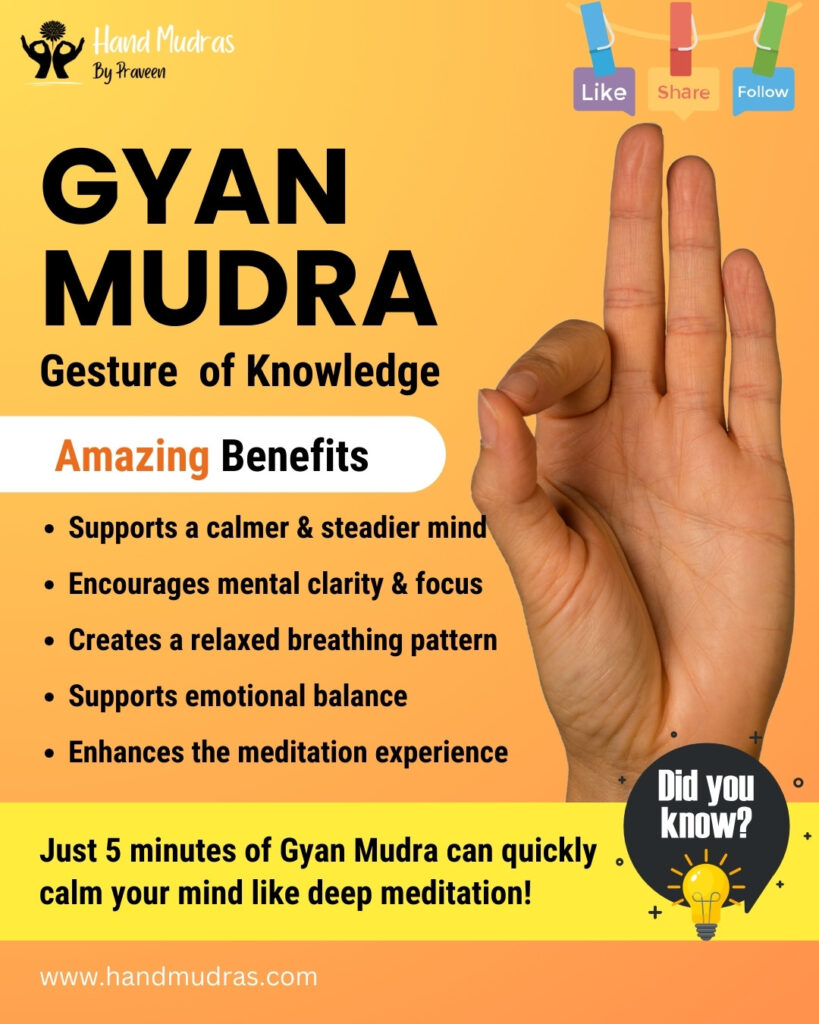
- Bring your index finger gently to touch the tip of your thumb
- Keep the remaining three fingers extended comfortably
- Do not press hard—keep it light and natural
Finger Placement
- Touch should be soft, not forced
- Avoid locking fingers
- Keep hands relaxed, resting on your knees or thighs
Posture
- Sit comfortably on a chair, yoga mat, sofa, or bed
- Keep your spine naturally straight
- Relax your shoulders and neck
- Close your eyes gently if comfortable
Breathing
- Breathe slowly and naturally
- Inhale deeply through the nose
- Exhale gently and fully
- Allow breathing to settle into a comfortable rhythm
Relaxation Cue
- Soften the jaw
- Relax the forehead
- Release any tension in the shoulders
- Just sit and allow yourself to feel present
When & How Long to Practice
Gyan Mudra can be practiced anytime, but consistency matters.
Best Time to Practice
- Morning practice helps set a calm tone for the day
- Evening practice supports relaxation before rest
Duration
- Start with 5 minutes
- Gradually extend to 15–30 minutes if comfortable
Frequency
- Daily practice is ideal
- Can be done during meditation, pranayama, or quiet sitting
- You may practice while sitting quietly, listening to soothing music, or during mindfulness time
Benefits of Gyan Mudra
General Wellness Benefits
- Supports a calmer and steadier mind
- Encourages mental clarity and focus
- Helps create a relaxed breathing pattern
- Supports emotional balance
- Can enhance the meditation experience
Lifestyle-Related Supportive Benefits
With regular mindful practice, many people include Gyan Mudra as part of a balanced lifestyle routine. When combined with healthy habits, medical guidance where needed, and overall wellness practices, it may gently support:
- Blood Pressure Management (Supportive Role)
Practicing Gyan Mudra in a calm sitting posture may encourage relaxation and steadier breathing, which can help create a soothing environment for those working on maintaining balanced blood pressure levels. - Diabetes & Lifestyle Balance (Supportive Routine)
While it does not treat diabetes, mindful practices like this mudra may support emotional calmness and routine discipline, which can be helpful alongside diet, exercise, and medical care. - Stress Relief & Emotional Well-Being
Gyan Mudra is traditionally linked to steadiness and clarity. Many people find it helpful for easing mental restlessness and managing day-to-day stress. - Better Sleep Support
Practicing gently in the evening may encourage relaxation and a calm state of mind, which can be supportive for better sleep habits. - Gut Health & Digestion Support (Indirect)
When stress levels reduce and the nervous system feels calmer, many people experience more ease in digestion. This mudra may indirectly support such comfort. - Pain Coping & Body Comfort (Mindfulness Support)
While not a treatment for pain, this mudra may help individuals feel more centered and relaxed, which can sometimes help in coping better with discomfort. - Anxiety & Mental Calm Support
Its grounding nature may help reduce feelings of overwhelm and support emotional balance with regular practice.
- Blood Pressure Management (Supportive Role)
Common Mistakes to Avoid
- Many beginners unknowingly do these—so staying mindful helps:
- Pressing fingers too hard
- Stiff or tensed hand muscles
- Slouching or leaning while sitting
- Holding the breath instead of natural breathing
- Practicing with restlessness or rushing the process
- Expecting instant or “miracle” results instead of patient consistency
Who Should Be Cautious
- Gyan Mudra is generally gentle and considered suitable for most people. However:
- Individuals with severe wrist, finger, or hand pain should practice gently
- Anyone with serious health concerns should consult their healthcare provider
- Avoid forcing posture or sitting in discomfort
- If you feel dizziness, numbness, or unusual discomfort, release the mudra and relax
- This practice is meant to be comfortable, calm, and supportive—not stressful.
Final Gentle Reminder
Gyan Mudra is a beautiful, simple practice to include in your daily routine. Approach it with patience, awareness, and kindness toward your body. Over time, it can become a peaceful companion in your wellness journey.
Important Note:
Gyan Mudra is a complementary wellness practice, not a replacement for professional medical care. Individuals with health concerns should continue following medical advice and medication as prescribed by their healthcare provider.