
Vayu Mudra
A gentle hand gesture to support gas balance, joint comfort, and calmness in daily life
Introduction
Vayu Mudra is a simple and traditional hand gesture practiced in yoga to help balance the Vayu (air) element within the body. It is especially valued for its grounding and stabilizing nature, making it suitable for beginners and older adults.
In daily life, irregular routines, stress, and aging can disturb the air element, often showing up as restlessness, stiffness, or digestive discomfort. Vayu Mudra is practiced as a supportive self-care habit, helping the body return to a sense of steadiness and ease.
What Is Vayu Mudra?
In yogic philosophy, Vayu represents movement—of breath, thoughts, joints, and digestion. Vayu Mudra is traditionally used to calm excessive air energy and encourage smooth internal flow.
This mudra does not claim to cure conditions. Instead, it is practiced as a supportive wellness technique, often combined with mindful breathing and relaxed posture to promote comfort and balance.
How to Practice Vayu Mudra?
Hand Position & Finger Placement
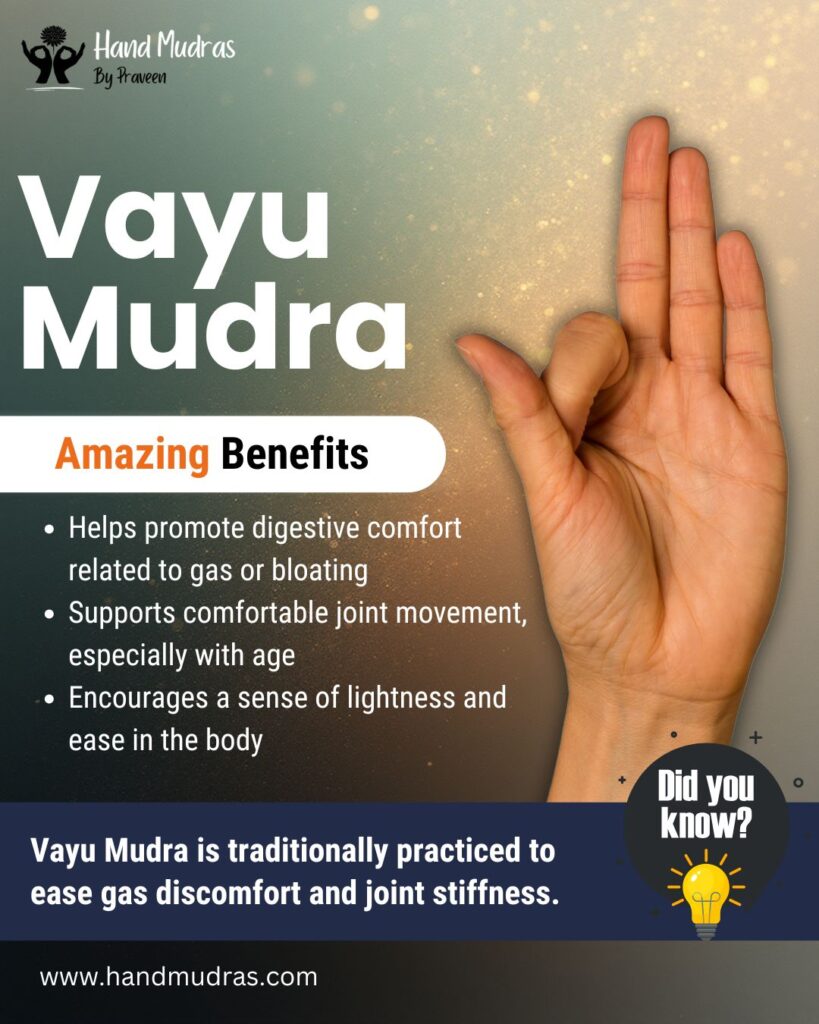
- Bend the index finger and gently press it to the base of the thumb
- Touch the thumb lightly over the index finger
- Keep the middle, ring, and little fingers extended comfortably
- Practice with both hands, resting them on the thighs or knees
Posture
- Sit comfortably on a chair or on the floor
- Keep the spine upright but relaxed
- Shoulders soft, jaw relaxed
Breathing
- Breathe slowly and naturally through the nose
- Avoid breath holding
- Let the breath become calm and steady
Relaxation Cue
- Close your eyes gently
- Bring awareness to areas of movement—breath, joints, abdomen
- Mentally repeat: “I allow balance and ease.”
When & How Long to Practice
Best Time
- Early morning on an empty stomach
- Evening, at least 2–3 hours after meals
- Can also be practiced during quiet breaks
Duration
- Start with 10–15 minutes
- Gradually extend up to 30 minutes
Frequency
- Once or twice daily
- Consistency matters more than long duration
Why Consistency Is Important
Regular practice helps the body become familiar with the calming signal of the mudra, making its effects more noticeable over time.
Benefits of Vayu Mudra
Exclusive & General Wellness Benefits
- Encourages a sense of lightness and ease in the body
- Supports comfortable joint movement, especially with age
- Helps promote digestive comfort related to gas or bloating
- Encourages mental calmness and emotional steadiness
Lifestyle-Related Support (All Age Groups)
- May support people managing joint stiffness and mobility concerns
- Helpful as a calming practice during stress or restlessness
- Often included in routines supporting digestive balance
- Complements wellness habits for blood pressure, diabetes, sleep quality, anxiety, and gut health when practiced alongside medical care
Common Mistakes to Avoid
- Applying too much pressure on the fingers
- Practicing with tense shoulders or clenched jaw
- Holding the breath or breathing forcefully
- Practicing immediately after heavy meals
- Expecting instant results without regular practice
- Slouching or sitting in an uncomfortable posture
Who Should Be Cautious
- Individuals with severe joint pain or nerve issues should practice gently
- If discomfort arises, stop the practice and relax
- This mudra should not replace medical treatment
- Always consult a qualified health professional if you have chronic conditions
Frequently Asked Questions
Q1. Can beginners practice Vayu Mudra daily?
Yes. It is gentle and beginner-friendly when practiced comfortably.
Q2. Can I practice it while sitting on a chair?
Absolutely. Chair sitting is perfectly suitable, especially for 40+ individuals.
Q3. How long does it take to notice benefits?
This varies. Many people notice subtle changes with regular, calm practice over weeks.
Q4. Can Vayu Mudra be combined with other mudras?
Yes, but beginners should focus on one mudra at a time for consistency.
Q5. Is Vayu Mudra safe for seniors?
Yes, when practiced gently and without strain.
Final Gentle Reminder
Vayu Mudra is a supportive wellness practice. Practice with patience, awareness, and kindness toward your body for the best experience.