
Apana Vayu Mudra
A gentle hand gesture traditionally associated with supporting heart wellness, calming breath, emotional balance, and overall relaxation.
Introduction
Apana Vayu Mudra is often referred to as the “Heart Support Mudra” in traditional yoga texts. Many practitioners use it as a calming hand gesture to help the body relax, steady the breath, and feel more grounded.
For adults above 40, who may experience lifestyle stress, emotional fatigue, or general heart-health concerns, this mudra can be practiced as a soothing self-care ritual to support overall well-being.
What Is Apana Vayu Mudra?
In yogic tradition, Apana represents the downward and outward moving energy responsible for cleansing, letting go, and relaxation. Vayu refers to air or life force movement in the body.
Apana Vayu Mudra combines these elements, symbolically encouraging:
- steadiness during emotional stress
- grounding when the mind feels restless
- comfort during moments of uneasiness
It is widely practised in yoga and Ayurveda-inspired wellness traditions as a supportive mudra for heart comfort, balanced breathing, emotional stability, and inner calmness.
How to Practice Apana Vayu Mudra?
Hand Position & Finger Placement
- Sit comfortably and relax your shoulders.
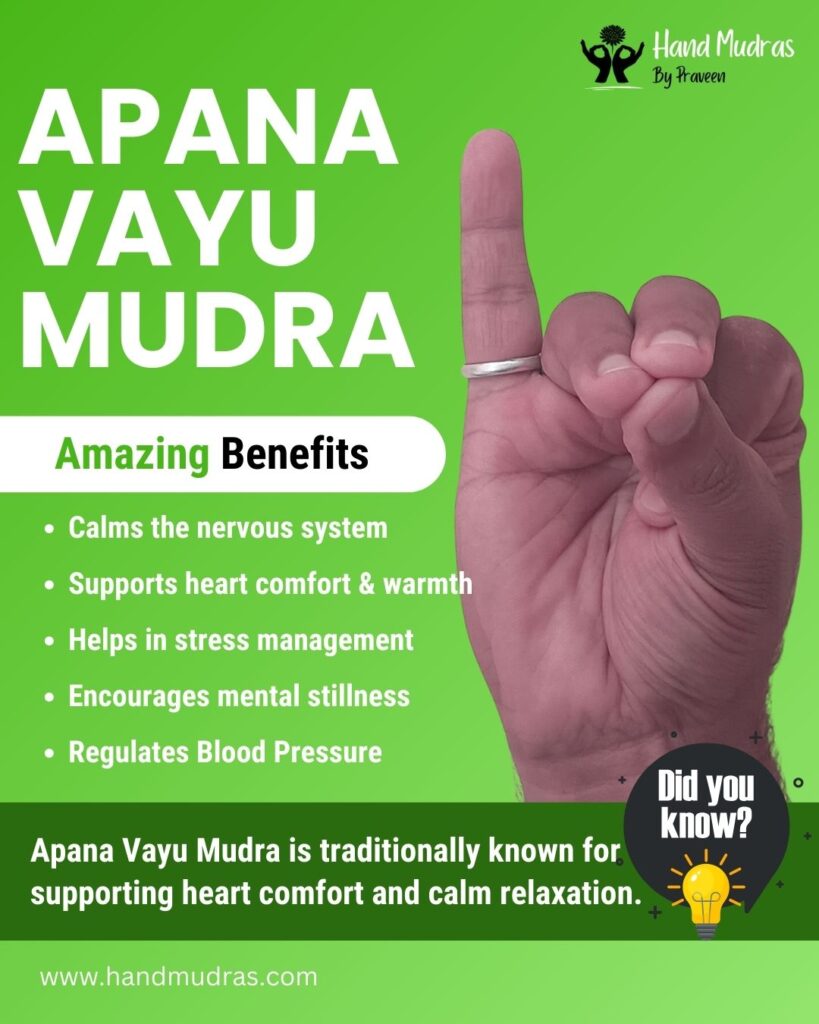
- Bring index finger to the base of the thumb.
- Touch tip of the middle finger and ring finger to the tip of the thumb.
- Keep little finger extended comfortably.
- Rest hands gently on the knees or lap, palms facing upward.
Posture
- Sit in Sukhasana (simple cross-leg sitting), Vajrasana, or on a chair with feet flat.
- Keep your spine straight yet relaxed.
- Close your eyes gently to feel more centered.
Breathing
- Breathe naturally.
- Slowly inhale and exhale with awareness.
- Allow the breath to soften and deepen gradually.
Relaxation Cue
- Imagine the body relaxing with each exhale.
- Feel a sense of calm around the heart and chest area.
When & How Long to Practice
Morning Practice
Practicing in the morning helps set a calm emotional tone for the day.
Evening Practice
Practicing in the evening may help unwind after daily stress or emotional strain.
Duration
- 10–15 minutes per session
- Can be extended up to 20–30 minutes if comfortable
Frequency
- Once or twice daily is usually recommended
- Consistency is more important than duration
Practice regularly for a few weeks to feel subtle supportive benefits.
Benefits of Apana Vayu Mudra
Mudras are supportive wellness practices. They may help create a sense of balance, calm, and relaxation when practiced regularly along with a healthy lifestyle.
Unique Supportive Benefits
Practitioners traditionally believe Apana Vayu Mudra may help with:
- calming the nervous system
- supporting heart comfort and warmth
- steadying emotional stress
- promoting grounding and relaxation
- enhancing deep breathing
- encouraging steadiness during anxious or overwhelming moments
Lifestyle-Related Supportive Benefits
This mudra is often practiced as a supportive companion for wellness routines in adults dealing with:
Blood Pressure Support
- May help promote emotional calmness
- Gentle relaxation may indirectly support a balanced state of well-being
Diabetes & Metabolism
- Helps in stress management, which is an important part of holistic lifestyle care
Stress, Anxiety & Tension
- Encourages mental stillness
- Supports relaxation response
- Helps reduce emotional overwhelm
Sleep Support
- Practicing before bedtime may support better relaxation and restful sleep
Pain & Discomfort
- Gentle relaxation may help the body feel more at ease
- Supportive for emotional comfort during discomfort
Gut Health & Digestion
- Relaxation of the nervous system may positively influence digestive comfort indirectly
Common Mistakes to Avoid
Many beginners unknowingly make small mistakes. Here are a few to watch for:
- Pressing fingers too hard instead of gentle contact
- Practicing with tension, stiff shoulders, or tight jaw
- Irregular breathing or holding breath unconsciously
- Expecting instant results instead of patient practice
- Incorrect finger placement (especially index finger not touching base of thumb)
- Practicing only when stressed instead of maintaining daily consistency
Who Should Be Cautious
Apana Vayu Mudra is generally gentle and suitable for most people. However:
- Anyone with serious heart conditions, recent surgery, or medical concerns should consult a doctor before starting any wellness practice.
- If you feel discomfort, dizziness, pain, or uneasiness, stop and relax.
- Pregnant women should practice any mudra under guidance.
- This mudra is meant as a supportive wellness tool, not a replacement for prescribed treatment.
Frequently Asked Questions
1. Can Apana Vayu Mudra cure heart problems?
No. Mudras are supportive wellness practices. They may help with relaxation and emotional comfort but are not medical treatment.
2. How long does it take to feel benefits?
Many people experience calmness within a few days to weeks of consistent practice. Every person’s experience is unique.
3. Can I practice it while walking or lying down?
It is best practiced while sitting comfortably with awareness. However, it can also be done while resting.
4. Can I practice after meals?
Yes, gently, but avoid immediately after a very heavy meal.
5. Do I need to chant or meditate along with it?
Optional. Even simple mindful breathing is enough.
Final Gentle Reminder
Apana Vayu Mudra is a beautiful, calming wellness practice that supports emotional stability, grounding, and relaxation—especially valuable for adults above 40 managing daily life stress. Practice regularly, stay gentle with your body, and treat it as a nurturing self-care habit.